Showing posts with label fiction. Show all posts

Wednesday, March 11, 2020

New Fiction

     Here it is at last: the long awaited fantasy novel by the foremost storyteller of our time:

     (What’s that you say? I’m not the foremost storyteller of our time? Geez, what a letdown! Could you keep it to yourself until I sell a few books? Thanks.)

     Gregor of Serebal, a journeyman sorcerer educated at the Scholium Arcanum in the East, is on a cross-continent trek through the Great Waste: the lifeless desert left by the Dieback that all but eliminated life from Aeol. He has been tasked to chart the courses of the major mana conduits of the continent. In the process he discovers that they have been diverted from their normal paths: Whereas they once flowed from north to south, they now flow from east to west. While there is no obvious explanation for their diversion, they appear to flow directly toward Pontreval, where the Scholium Arcanum in the West is situated.

     Laella of Anam is a gifted one: a potential sorcerer not yet trained to the disciplines that would make it safe to practice. Yet the mana has already touched her to ill effect. It has made her a virgin mother, to the horror of her family and neighbors. The ruler of her village has executed her infant son, and the infant children of three other women similarly afflicted, when Gregor arrives in Anam.

     Mutual admiration brings them together. Once mated, they travel further west through the Great Waste in pursuit of Gregor’s errand. But though his intent was to walk all the way across the continent, charting the mana streams as he traveled, events will force them to return to Urel, the site of the Scholium Arcanum in the East where Gregor was made an initiate of the Arcana. There he and Laella will confront mysteries the sorcerers of the Scholium cannot unravel. Beneath those mysteries lies a threat to the life of Aeol that will demand all that Gregor, Laella, and their colleagues have to give.

     The Warm Lands is only $2.99 at Amazon.

Saturday, August 4, 2018

Free Fiction!

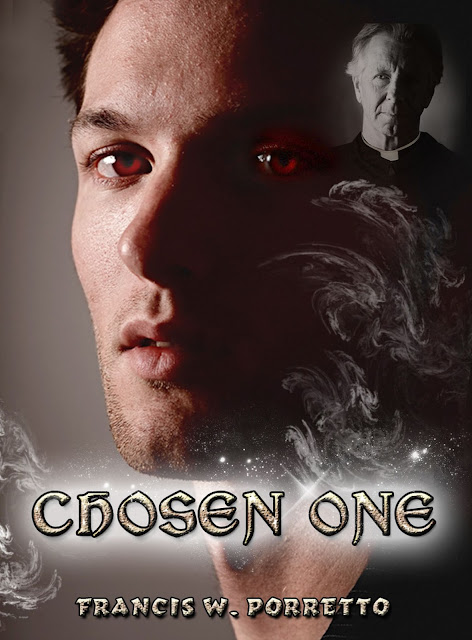
     My novel Chosen One, the first volume of the Realm of Essences series, will be free of charge at Amazon throughout today: Saturday, August 4, 2018:

     From his earliest days, Louis Redmond proves to be a prodigy: brilliant, powerful, and great-souled, a trailblazer of the spirit and a natural leader of men. Armies would follow him into the mouth of Hell. Yet tragedy dogs his steps, depriving him of family and friends. Hammerblow follows hammerblow, giving him little time to recover.

     But Louis is watched over by one who knows all the ways of Man: Malcolm Loughlin, immortal grandmaster of all things martial, who’s trained the world’s great warriors for two millennia. His wisdom, enough to elevate Louis to the throne of the world, is available to Louis, for a price...

     A price even a Titan would shudder to meet.

     But today, August 4, you won’t have to pay any price. So get it while it’s hot and cheap!

Wednesday, June 6, 2018

Love And Danger

     Once in a great while, I’ll write a short romance. On even rarer occasions, I’ll write a romance novel. And when it seems fitting, I’ll incorporate a romantic subplot into a fantasy or science fiction novel. So far, my readers don’t seem to mind. Indeed, many of them have commented approvingly.

     Mind you, I don’t do “bodice rippers.” These are also known as “sweet savages,” in the tradition of the Rosemary Rogers novel that inaugurated that particular subgenre. I prefer greater realism...well, when not writing about anarchist colony worlds, alternate Creation myths, or bizarre developments in biotechnology. I consider love too important to be other than realistic about it, no matter how many young women and middle-aged spinsters dream of being carried off by dashing buccaneers or ravished by devastatingly handsome vampires.

     But there’s this about love, or at least about romance: Danger tends to render us more susceptible to its lure. So there’s a natural place for romantic themes in stories that feature some sort of adventure.

     I see no reason to explore the psychology of the thing. What I have in mind on this 74th anniversary of the Normandy invasion is the gradual infusion of romance into the “dangerous” genres over the past few decades. It’s stirred up a lot of dust, especially among “traditional” aficionados of those genres. Many of them have reacted negatively, as if “their” readers’ habitat were being invaded by something that doesn’t belong there.

     I don’t get it, myself. The yearning for love is one of the most powerful of the human drives. According to Maslow, it comes in just after the quest for security – and I’ve sometimes wondered whether the two drives are really distinct. Why shouldn’t it have a place in stories from the “dangerous” genres?

     The subject has become especially heated in discussions of fantasy and science fiction.


     What constitutes “real” fantasy or “real” science fiction is a debate to which there is no final answer. The arts are like that. (I may not know anything about what I like, but I know art.) Consumer preference is all that matters; if it sells, that’s sufficient justification...at least, to the creator thereof. Still, you can encounter a squabble about the issue at any F&SF convention. Sometimes they’re organized as panel discussions. Sometimes they’re “organized” as fist fights.

     I’ll allow that when a genre becomes popular, writers that aren’t selling well will be tempted to try to wedge their stuff into it: square pegs jammed into round holes by main force. I recall a rather humorous story from an agent about a writer of Westerns, a genre that’s been on the skids for some time, trying to rewrite his most recent Western as an SF novel. The protagonist even strove to head off the bad guys at the Horsehead Nebula. This is good for a giggle, and perhaps for the occasional parody, but not for much else.

     But merely to incorporate a romantic element into a novel is no sin. Indeed, many a rather dry story has struck me as demanding an admixture of emotion. It often comes down to the questions “Why does the protagonist (or antagonist) do what he does?” and “What is he looking for?” If these questions aren’t answered adequately, the relevant figure is under-characterized. Under-characterization is almost always a failure by the writer to connect the character to the most important human drives, the ones we all share whether or not we manage to satisfy them.

     (A brief digression: Some drives can be transformed from a constructive and approved form to a destructive and highly disapproved form. I don’t have a word for this. The term for the opposite is sublimation. But consider if you will the character of Tiny from On Broken Wings. I submit that Tiny displaced his yearning for love into a need for dominance. I’ve known real people like that. End of digression.)

     Romantic possibilities can be approached from either of two directions. For example, one of the most striking characters in recent thriller fiction, Lee Child’s Jack Reacher, regularly wrestles with his own yearning for love. It manifests in just about every Reacher novel. He encounters an appealing woman in the course of the action. At some point they connect emotionally (and usually physically as well). However, by the end of the tale Reacher’s determination to keep moving prevails over his need for intimacy. It gives him a strange, anti-romantic dynamism that’s part of his appeal. I keep wondering when he’ll meet the girl whose appeal for him is enough to get him to give up the road life. I’ll bet a lot of Reacher addicts do.


     This is on my mind because of the book I’m currently struggling to write. It’s a sequel to Innocents. It also features several of the characters from my futanari stories (“A Place of Our Own,” “One Small Detail,” and “A Daughter of the County”). The story treats with the current foofaurauw over transgenderism, with particular attention to the sociological and psychological aspects. Inevitably, it must address matters of love and sex...and inevitably, I’ll get a few reviews such as this one:

     Unsatisfying mil action, unrealistic romance. Marty Sue hero who ends up forced to do the thing he wants but knows he shouldn't.

     Let’s just say I’m braced for them.

     I know a few high-octane writers – indeed, some very good ones – who shy back from those subjects. They prefer to concentrate on things they know better: technology, combat, political and social strife, or what-have-you. I appreciate the importance of “writing what you know.” I certainly wouldn’t counsel anyone to write about what he doesn’t know. But I’d suggest to those writers, and to many others who share their aversion, that that doesn’t invalidate romantic themes and motifs as elements in stories such as theirs. They might want to try wetting their feet in those waters. It can do quite a lot for one’s powers of characterization.

     After all, what moves a man to risk his life, his fortune, and his sacred honor more often than love?

Monday, May 21, 2018

Affrighted

     It’s an old word, I know. Its meaning “should” be fairly “obvious.” And it describes a condition from which I suffer at predictable intervals.

     There are many kinds of fear, and many sources for each. For an old man whose final horizon is drawing steadily nearer, it’s common to fear that he’ll die before he’s “ready.” Let’s leave aside for the moment what it means to be “ready” to meet one’s Maker.

     My principal fear in these latter days is of deterioration. Aging brings that with certainty. We lose strength, endurance, agility, flexibility, and – most unfortunately – we lose mental acuity. These deteriorations can be slowed, in some cases even halted, by the right sort of effort and enough of it. But the effort becomes harder to maintain as one ages and grows wearier.

     There’s one fear about which I try not to think and of which I seldom speak, because it affects the core of my usefulness to others. It’s the fear that my abilities as a writer are diminishing.

     I’ve been cranking out op-ed drivel for more than twenty years. Occasionally the impulse seizes me to revisit older pieces: my archives from Eternity Road and The Palace of Reason. Some of those older pieces are a lot better – more sharply focused, more neatly phrased, and overall more powerful – than anything I’ve posted at Liberty’s Torch. The recognition draws a graph I dislike to face.

     But I’ve also been cranking out fiction over that interval. Now and then I get the urge to reread one of my earlier novels or stories. I don’t always resist it. I’m beginning to wonder if I should.

     Op-ed writers are plentiful. (Some would say we suffer an oversupply.) But good storytellers, despite the recent surge in fictions available to the reading public, remain pretty rare. My current sense of whatever enduring value my efforts have for others is that it resides mainly in my storytelling.

     And I’ve become afraid to continue it.


     You’ll seldom hear a writer with a substantial oeuvre speak of a fear that he’s losing his powers. At least, I can’t remember the last time I read any such thing from a writer whose work I’ve enjoyed. Still, I have a sneaking suspicion that I’m not the only writer who’s ever suffered from that fear.

     My most recent three novels, Love in the Time of Cinema, Statesman, and Innocents, cost me agonies to complete and further agonies to release. From cover to cover of each, I worried that I’d lost my chops – that I could no longer tell the kind and quality of story I’m known for. That fear made me sensitive to reviews and reader email. A review such as this one:

     A superior wordsmith by far than many better known authors, he has a unique ability to write believable characters with extraordinary depth. But the storytelling! My goodness. He holds a near-unique ability to mix religious themes, challenging moral situations, relationship, and some good ol' fashion butt-whoopin' all in one. This text is no exception.

     ...would lift my spirits and (temporarily) reassure me that I was still firing on all twenty-three cylinders. A review such as this one:

     Unsatisfying mil action, unrealistic romance. Marty Sue hero who ends up forced to do the thing he wants but knows he shouldn't.

     ...would leave me in a funk for days, wondering whether I had any business polluting my own record with fresh tripe. And in the nature of things the negative reviews and the negative emails weigh more heavily on the mind than the positive ones. (The average review for a work of fiction at Amazon is slightly over four stars; think about what that implies.)

     The result is an increasing reluctance to start a new story. In case you’ve wondered why the books are being spread further apart in time, now you know.


     I’m not fishing for reassurance here. I’m mostly doing something I think isn’t done often enough. I’m articulating a besetting fear of the old: the fear that one has transitioned from an asset, valued by others, to an encumbrance they’d as soon be rid of. I think more of us older folks suffer that fear than is generally admitted.

     The marvelous recent movie Act of Valor has something to say about this, as well:

     Before my father died, he said the worst thing about growing old was that other men stopped seeing you as dangerous. I've always remembered that, how being dangerous was sacred, a badge of honor.

     Being dangerous is the critical requirement of a soldier. Every occupation has a critical requirement...and every one of us must fear that a time will come when he “just can’t cut it any more.”

     If you have older relatives or friends, and you sometimes see them mired in an unexplained gloom, this could well be the reason. If you’re still in the prime of life, you will probably know that fear soon enough for yourself.

     Food for thought.

Saturday, November 25, 2017

Right, Wrong, Good, Bad, And Tastes

     “De gustibus non est disputandum.” – some Roman or other.

     “Chacun a son gout.” – some Frenchman or other.

     “Jesus, am I tired,” he says.
     “Yeah, well, that’s a helluva big secret you’ve been keeping on yourself,” Berger says.
     “So what do I do now?”
     “Well, you’ve done it, haven’t you? Revelation. She’s not perfect. Recognize her limitations.”
     “You mean, like she can’t love me.”
     “Like she can’t love you enough. Like she loves you as much as she’s able. Perspective, kiddo, remember? Maybe she’s afraid. Maybe it’s hard for her to give love.”
     “No,” he says, “it isn’t. She loves my father, I know that.” He closes his eyes. “She loved my brother, too. It’s just me.”
     “Ah, now we’re back to the old rotten-kid routine. She doesn’t love you because you’re unlovable. So where does that leave your dad? How come he loves you? Doesn’t he know what a rotten kid you are?”
     “That’s different. He feels responsible. Besides, he loves everybody.”
     “Oh, I get it, the guy’s got no taste. He loves you, but he’s wrong.”

     [Judith Guest, Ordinary People]

     Were I able to locate the CD, I’d have included in the above set of quotes a magnificently insightful statement by persuasion specialist Michael Emerling, which I shall now proceed to paraphrase: the quick road to total ineffectiveness at persuasion is to define the other guy’s convictions, preferences, and tastes as “wrong.” Indeed, that’s the quick road to total ineffectiveness at life itself.

     Those of us who sell entertainment must make our peace with the great variety of personal tastes out there. Those of us who sell fiction, even in this era of anything-goes and self-publishing that owes nothing to anyone, must be particularly alert to that diversity. It matters a hell of a lot more than race, sex, or political alignment.

     A couple of years back I locked ‘em up with another writer – not a fictioneer, an opinion-monger – who took me to task for using the word Negro. He claimed it was offensive – that it indicated that I harbor a desire to “make black people feel bad.” A couple of years before that, a different fellow upbraided me for making Angela Farnsworth, the co-protagonist of the segment “Incantations” in my novel Chosen One, a Negro. And of course, as I’m utterly resolved to use (and promote the use of) “he-his-him” as the generic singular pronouns, I get flak regularly from militant feminists, and more recently from transgender activists as well.

     I’ve learned to shrug it off. Why worry about readers whose principal criterion for enjoyment is that their entertainment conform perfectly to their social and political opinions? They won’t be back. I have my own convictions, preferences, and tastes to appease. Why should I devalue them for the sake of some emotionally constipated militant for attitudes I’ve rejected?

     I’ve had a fair number of writing colleagues suggest to me that I’m reducing my potential sales by insisting on going my own way. They’re probably right, but what of it? I’m not a hooker. Indeed, even hookers don’t insist on pleasing everyone.

     One of the truly marvelous things about the present day is that just about anyone can find fiction that will suit his preferences down to the last comma. That immense diversity of personal tastes is just as great a blessing from the writer’s perspective. However, it does make it more difficult to talk about “right and wrong” in the crafting of fiction.


     Way, way back in the Early Obscene, when we were all swinging from tree to tree in search of a perfectly ripe banana and I still harbored a fantasy of conventional publication, I read in several publications for the terminally deluded aspiring writer that the prologue was “passé.” More specifically, these folks put forth the proposition – which for all I know was correct then and remains so today – that opening a novel with a prologue greatly increases the probability that Pub World editors would reject it.

     As the seasons changed and my hairline receded, I gradually became convinced that Pub World would never show an interest in my weird, Catholic-flavored, overtly heroic and freedom-oriented fiction. So I dismissed the advice of all those presumably well-meaning publications and did what I damned well pleased. In late 2009, when I decided at last to “go indie” and self-publish, I put forth exactly what I’d written – what I’d wanted to write. As there were quite a few readers, both in the U.S. and in other countries where English is spoken or widely taught, who’d been looking for the sort of thing I write and were greatly displeased by its absence from Pub World’s offerings, I gained a readership. Those readers didn’t seem at all put off by the prologues to Chosen One and Which Art In Hope. Maybe they hadn’t read my betters’ condemnations of such things.

     “Good and bad” in fiction have always been matters of taste. There are people who think Dhalgren is a work of genius. There are others who consider it vile trash. (I’m in the latter category.) As an engineering colleague of mine likes to say, that’s why there’s chocolate and vanilla.


     It may not be clear what I’m driving at here. (It wouldn’t be the first time, would it, Gentle Reader?) Candidly, it can be reduced to a single sentence:

The writer should write what pleases him.

     (Ah! Those contentious, sententious pronouns! They’re everywhere.)

     Your audience will self-select. Until they deign to speak to you, whether through email, Amazon reviews, social media, or what have you, you won’t know what pleased them and what didn’t. Even when they do, what matters most, unless the collection agents have massed on your lawn, are hollering at you through bullhorns, and are brandishing their battering rams, is, was, and will always be whether your fiction satisfies you.

     That having been said, I do hold that there are “better” and “worse” ways to approach description, dialogue, fictional time management, transitions between scenes and viewpoints, and so forth. I’m not bashful; I’ll readily say so to those who approach me for critiques. But the persons issuing the judgment that really matters will be those who elect to lavish their money and time on your fiction. In a world with 7.5 billion people in it, a great many will find fault with your choices...and many others will applaud. So don’t let the Constipated Ones constipate you.

     This weekend is for giving thanks. If you write, you might include in your personal list some gratitude for the independent-writer / self-publishing revolution. While it has had its costs, it has also made a great many good things possible...including, of course, this essay. Now it’s time to surf over to Amazon and find something decent to read!

Friday, February 3, 2017

Where The Books Are Headed

     “I’m only here for the weekend,” he said.
     “I’m dancing as fast as I can,” she replied.

     [Barbara Gordon]

     In the wake of this wholly undeserved praise from Mike Hendrix, enough readers – old and new – have been asking “where’s your fiction headed?” that I figured a brief post about the matter would be appropriate.

     With Statesman, the Realm Of Essences series has left the Earth. I’m afraid my fictional USA (and the rest of the world) are in for some rough sledding. There will be more stories involving characters from that series, but the principal “story arc” terminates with Sumner’s rescue and exile to the Arcologics Habitat.

     With Freedom’s Fury, the Spooner Federation series has left Hope in transition back toward States and their multifarious consequences. As the saying goes, “this will not end well,” at least for the planetside population. But Althea is unwilling to be ruled, and a bit less than willing to live out her indefinitely long life immured inside an airless rock. Further interstellar travel, in search of a new world to colonize, lies ahead for Althea, Martin, Claire, and of course Probe.

     A gratifying number of readers have asked whether there’s anything left to the tale told in Love In The Time Of Cinema. I’m of two minds about this. I love that little novel; I return to it simply for my own refreshment, embarrassingly often. However, just now I can’t find a way to evolve more stories from it. Not that I’m about to stop thinking about it! We shall see.

     The “stand-alone” novels, The Sledgehammer Concerto and Priestesses, occasionally evoke queries, but I’m content to leave them be, at least for the moment.

     Here’s what I have on the drawing board:

  • A novel founded on a “dark” version of the central motif in A Place Of Our Own and One Small Detail;
  • A novel that extends the stories told in The Warm Lands and The Common Good;
  • A novel set inside the timeline of Statesman that explores necromancy and why one might attempt it;
  • And a notional novel that would unite the timelines of the Realm Of Essences and Spooner Federation series with a set of “capping” events.

     As I’ve said before, I don’t write fiction with the ease or speed I enjoy with op-eds, so please bear with me while I sort it all out.

Sunday, June 12, 2016

Originality: A Writer’s Rant

     I’m a writer. Therefore, I read.

     A bit too much of a jump for you, Gentle Reader? Nevertheless, it is so. A writer must read. Nonfiction writers must read to know what’s going on, and who’s covering it, and to what effect. Fiction writers must read for pretty much the same reasons. The penalty for stinting one’s reading is unoriginality: If you don’t read, you’re practically guaranteed to reproduce the works of others. Something about the “great oceanic racial unconscious,” or some such rot.

     However, the reverse is not true: reading widely and determinedly doesn’t guarantee the originality of one’s own work. As exhibits 1 through 10100 I offer just about everything that’s been written these past fifty years.

     This is of particular importance in the speculative genres: fantasy, horror, and science fiction. These genres exist solely to provide room in which to explore possibilities that go beyond the realities around us. But one who reads extensively in those genres can’t help but notice that the same motifs and tropes are being used to exhaustion. The sin is not confined to a few hacks; it’s afflicted damned near everyone in the field.

     Fantasy – especially fantasy set in the present day – is particularly badly afflicted by unoriginality. Vampires. Werewolves. Shapeshifters. Zombies. Magic. Every now and then, an angel. Find me a writer of contemporary fantasy who’s completely eschewed those motifs. There aren’t many.

     I know, I know: A lot of writers are afraid to try something new for fear that it won’t find an audience. It’s a legitimate concern, though it was more so before indie publishing exploded. But what does it profit it a man to gain an audience at the price of seeing someone else’s reflection in the mirror?

     Why do something others have done before you – possibly more vividly than you?


     If you’re a writer, probably the worst advice anyone has ever offered you (or ever will) is about your “voice.” “Find your unique voice.” “Respect your voice.” “Don’t imitate the voices of others.” Bah! For reasons beyond human comprehension, this “voice” crap has almost completely obscured the most important aspects of storytelling:

  1. Plot,
  2. Characterization,
  3. Theme.

     For those who consider those “undefined terms,” I will elaborate:

  1. Plot: The events in your story and the causal connections that link them together.
  2. Characterization: The values, motivations, and individualities of your Marquee and Supporting Cast characters.
  3. Theme: The aspect of human nature you intend to illuminate with your story.

     These are the meat and bones of a good story. And none of them have a single damned thing to do with “voice.”

     What’s that you say? What about your style? Permit me to guffaw. If you’re at all concerned with your “style,” you’re more concerned with self-glorification than with your story.

Tell the BLEEP!ing story!

     Tell it clearly and transparently. Resolve not to become a part of it: i.e., not to inject your desire to be noticed into the text. Be guided by how you would tell it orally, to a friend or acquaintance sitting next to you. What would you want from such an effort?

  • His undivided attention from beginning to end;
  • His apprehension and appreciation of the reasons your characters did what they did.

     You won’t get either of those things if you permit yourself to become concerned with “style.” Yet “style” has become so important to so many writers that they’ve ceased to care about plot, characterization, and theme.


     The above segment might appear to be a digression from the opening subject of originality. It is not. It’s a look at what too many writers are focused on at the expense of their stories. Originality lies in the story, not in “voice” or “style.”

     I have a naughty suspicion that when Flannery O’Connor said:

     Everywhere I go, I'm asked if I think the universities stifle writers. My opinion is that they don't stifle enough of them. There's many a best seller that could have been prevented by a good teacher.

     ...she had this obsession with “voice” / “style” in mind. On another occasion, she said that “The writer can choose what he writes about but he cannot choose what he is able to make live.” There is nothing of “voice” or “style” in what one is “able to make live.” That’s a function of human nature: what God has made us.

     By implication, we cannot be original about our themes, for they must proceed from human nature and the way it operates among us. There are also severe limits on originality in character construction: some from the extent of the writer’s acquaintance with others, still more from human nature itself. But at the minimum we can be original about the setting into which we cast our characters and the events in which they become embroiled.


     A few nuggets for consideration, specifically for science-fiction writers:

     Space travel as a motif is all very well...but why are your characters doing it? What do they hope to gain, and what price must they pay for it? What conflicts will arise among them along the way?

     Superhuman powers? Well, they’ve certainly been used quite a lot...but the patterns SF writers have followed have worn the tread off most of them, and as for the comic-book industry...well, perhaps we shouldn’t go there. Can you come up with a new one? This writer did.

     Time travel? I’m not sure you want to go there. The problems involved are so great that even Gregory Benford, one of SF’s true geniuses, had trouble making such a story consistent – and his story won the Nebula Award.

     Indefinitely prolonged life? This is another extremely familiar motif in SF. Many have fantasized about its attractions...but who has written even a word about its drawbacks? Who has dared to speculate upon the emotional maladies that would afflict one who cannot die – or is afraid to die? Who has dared to write about the upheavals that would arise in a longevity-capable society in which some choose to live no more that threescore and ten? And what about the possibility of an unanticipated, severe contraction in human lifespans? Who has written about what would flow from that?

     Use any or all of the above if you must -- I did -- but try to do something new with them. Find a conflict no one has thought to use before. Make it one that forces your Marquee characters to come to grips with desires or fears others have not thought to address. If you can, give them antagonists that aren’t merely standard-issue villains.


     I’m about ranted out for the moment, but I trust the message is clear: If you must write, be original. Produce something that, at least as far as you know, is yours alone – and by that I don’t mean a story written entirely in anagrams, or every third word in Esperanto, or told without use of the letter “t.” Readers everywhere are desperate for new experiences, experiences that go beyond what the writers of the past have explored. They want to feel the great emotions, and they’ll be very generous to you if you can take them on such a journey, but in the name of God give them a new vehicle in which to do it.

     I have spoken.

Tuesday, August 4, 2015

For Those Who've Requested It

     ...and anyone else who likes a (relatively) decent short romance: This collection comprises my short romances written since 1995. Sex? Yes, a little. Love? Yes, quite a lot. And optimism about the human heart and soul.

     Only $0.99 at Amazon. Enjoy!